
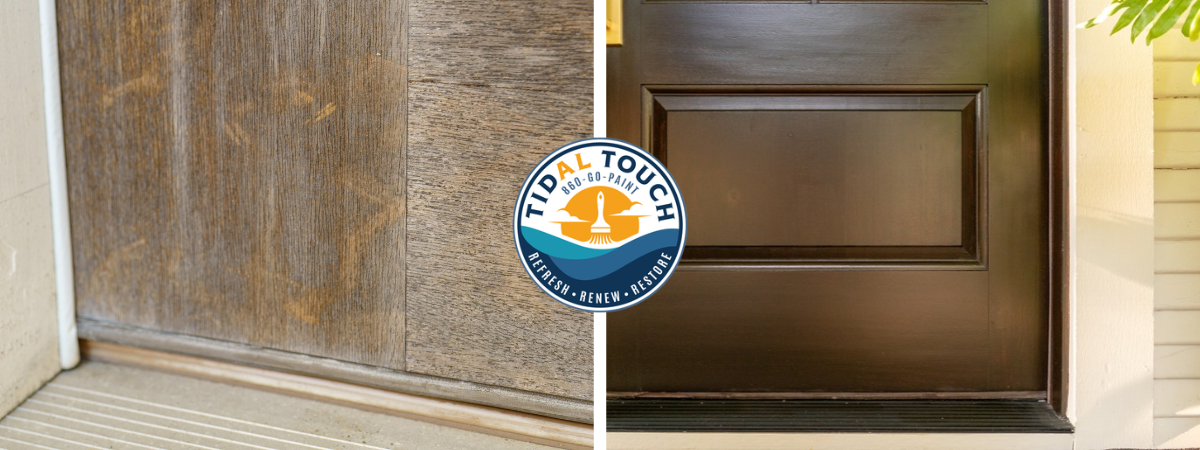
A stained wood front door makes a great first impression, at least until the Gulf sun has a few summers at it. The lower panels fade first. Then the finish goes dull or chalky, the wood feels rough under your hand, and eventually the clear coat starts lifting at the edges.
Most of those doors can be saved. How you restore a sun-damaged wood front door comes down to how far the finish has broken down.
If it’s intact and just dirty, a careful cleaning might be all it needs. If it’s thin and dull but still stuck to the wood, a light scuff sanding and fresh maintenance coats can bring it back. If it’s peeling, cracked, or the wood underneath has turned gray, the old finish has to come off and the door gets refinished from bare wood.
I’m Nate with Tidal Touch. We refinish front doors all over Gulf Shores, Orange Beach, and Fairhope. Below is the same thinking I walk homeowners through when they ask what their door needs, plus a few things most DIY guides leave out.
Why Wood Front Doors Fade So Fast on the Gulf Coast
A clear finish lets the grain show, which is the whole appeal, but it also lets UV light reach the wood. The sun slowly breaks down the finish and the wood surface underneath it. Throw in our humidity, salt air, and storm season, and a door down here can wear through its finish faster than the same door would somewhere milder.
Direction matters as much as the product. South- and west-facing doors take the hardest sun, and Simpson Door Company’s care guide tells owners of those entries to check the finish more often. The bottom rail and lower panels usually go first because they catch rain splash and the low afternoon sun that slips under a porch roof.
A quick way to size up your own entry:
Simpson’s rule of thumb is an overhang that sticks out at least half the distance from the bottom of the door to the underside of the overhang.
If yours falls short of that, expect to maintain the door more often. And if there’s a glass storm door in front of it, make sure it’s vented. Simpson calls for venting because a closed-up storm door can trap a lot of heat against the wood.
Does Your Wood Front Door Need Cleaning or Refinishing?
Give the door a five-minute look in good daylight. Run your hand across the lower panels and look closely at the bottom rail and edges. Then flick a few drops of water onto the most weathered spot. If the water beads up, the finish is still protecting the wood. If it soaks in and darkens the wood, the protection in that spot is gone.
From there, match what you see:
Hairline cracks, color changes, flaking, and dullness or chalkiness as signs it’s time for maintenance. You don’t have to wait for the finish to fall off.
How to Clean a Wooden Front Door Without Damaging the Finish
If the finish is in decent shape, go gentle. On a newer door with a factory finish or a warranty, check the manufacturer’s care instructions first.
Grab three soft microfiber cloths (one to wash, one to rinse, one to dry), a bucket of warm water with a few drops of mild dish soap, a second bucket of clean water, and an old towel for the threshold.
- 1Clean when the door is shaded and cool to the touch. On a west-facing door, that usually means morning.
- 2Wipe off loose dust and cobwebs with a dry cloth so you’re not dragging grit across the finish.
- 3Test a hidden spot first, like the hinge-side edge. If the finish turns soft, sticky, or cloudy, stop.
- 4Wash in small sections with a cloth that’s damp, not dripping. Light pressure is plenty.
- 5Rinse with the second cloth and clean water so soap film doesn’t dry on the surface.
- 6Dry each section right away, paying extra attention to the bottom rail and panel corners where water likes to sit.
Keep the hose, pressure washer, scrub pads, and vinegar away from the door, along with anything caustic or abrasive. Skip furniture polish too. A lot of polishes contain silicone, and silicone left on the surface can keep the next coat of finish from bonding. For the glass, spray cleaner onto your cloth instead of the door so it doesn’t run down onto the wood.
Cleaning takes off the grime that’s hiding a good finish. It can’t put back the finish the sun already took.
Can You Restore a Faded Wood Door Without Stripping It?
A lot of the time, yes, as long as the existing finish is still well bonded. McCloskey’s instructions for Man O’ War spar varnish say previously varnished wood in good condition only needs to be cleaned and have the gloss dulled before recoating. Anything in poor condition has to come off first.
One check we use on the spot: press a strip of painter’s tape firmly onto a worn area and pull it off quickly. If flakes of finish come up on the tape, that finish isn’t bonded well enough to coat over.
Compatibility matters as well. McCloskey warns against applying its varnish over lacquer, shellac, or stearated sanding sealers. If you don’t know what’s on your door, ask the builder or whoever finished it last, or try the new product on a small hidden spot and give it time to cure before you trust it.
The one move to avoid is brushing fresh clear coat over a finish that’s already peeling. It looks good for a little while, then comes up with everything underneath it.
How to Refinish a Sun-Damaged Wood Front Door
When a wood front door’s finish is peeling or wearing away, cleaning alone won’t restore it. The work needed depends on the door’s condition and existing finish, but refinishing generally involves these steps:
- 1Prepare and clean the door. Protect nearby glass, hardware, and flooring, then carefully remove dirt and surface buildup. Once the door is dry, take a closer look at the finish to see what needs attention.
- 2Address the worn finish. Loose or failing coatings need to be removed so the new finish has a sound surface to bond to. That may involve sanding, stripping, or a combination of methods, depending on the door and the products being used.
- 3Smooth and prepare the surface. Address rough areas and minor imperfections, then remove sanding dust before moving on. Veneer doors need a particularly gentle approach to avoid sanding through the thin wood surface.
- 4Refresh the color if needed. Staining can help restore faded color or give the door a different look. Test the color first, and choose a stain that works with the planned protective finish.
- 5Apply a suitable exterior finish. Use a coating intended for exterior wood doors and compatible with the prepared surface. Application methods, coat counts, and drying times vary, so follow the instructions for the specific products and door.
- 6Check the details. Pay attention to edges and other areas that need protection, allow the finish to dry as directed, and check that hardware and weatherstripping are properly in place.
If you’re tackling this yourself, identify the existing finish before choosing products. If you’d rather have help, Tidal Touch can assess your door and recommend the preparation and finish that suit its condition, exposure, and the look you want.
Weather gets a vote, too. McCloskey’s directions call for air and surface temperatures between 50 and 90°F, no direct sun, and no application late in the day when dew could settle on wet finish. Humidity stretches drying time, so on the coast we schedule coats for the right part of the day and don’t cut the wait between them short.
Two safety notes if you’re doing this yourself. Rags soaked in oil-based finish can catch fire on their own, so McCloskey says to put them in a sealed, water-filled metal container right after use. And if your home was built before 1978, there may be lead-based paint on the door or trim. Read the EPA’s lead-safe guidance for DIYers before you sand or strip anything.
Is Spar Varnish a Good Finish for a Front Door?
It can be. Proluxcoatings lists exterior entry doors among its uses, and the manufacturer says it’s made to stand up to UV, rain, and coastal salt spray. The technical sheet also describes it as staying flexible as wood swells and shrinks with the seasons, which counts for a lot on a door that lives through August humidity.
It comes in gloss, semi-gloss, and satin, and there’s more than one version of the formula on store shelves. Follow the directions on the exact can you’re using rather than a sheet for a different version you found online.
Spar varnish is one of the options we use, and we choose the finish system for each door based on its wood, what’s already on it, and how much sun and weather it takes. No clear finish is maintenance-free in full Gulf sun, so plan on keeping an eye on it.
Should You Paint Your Front Door Instead?
If your door takes full afternoon sun with little overhang, paint deserves a serious look. Pigmented paint shields the wood from UV much better than a clear coat, and Simpson points out that stain-and-clear finishes hold up noticeably better when they’re protected from direct sun and weather. A painted door still needs sound wood, good prep, and a primer and paint designed to work together.
Before you pick a dark color for a sunny entry, check your door manufacturer’s rules. Simpson warns that dark colors can heat a door enough to cause cracking and splitting, limits its warranty on dark-painted exterior doors, and says dark stains shouldn’t be used on its exterior doors at all.
If paint makes more sense for your house, we handle doors and trim along with full coastal exterior painting.
Front Door Refinishing in Gulf Shores, Orange Beach, and Fairhope
If you’re not sure where your door falls, start with our front door refresh visit. We give the door a careful, thorough cleaning and take a close look at the finish while we’re there. Then you get a straight answer on what it needs, whether that’s regular cleaning, a maintenance coat, or a full refinish.
The cleaning stands on its own. Sanding, staining, repairs, and new clear coats are separate work, and if your door needs any of that, we’ll lay out the price clearly before anything starts.
Tidal Touch provides wood front door refinishing and staining in Gulf Shores, Orange Beach, and Fairhope, along with the rest of Baldwin County. You can also read what homeowners have said about their doors in our reviews.
Tell us what you’re seeing on your door, and we’ll help you figure out the right next step.
[Button: Get Help With My Front Door, linked to https://tidaltouchpaint.com/get-quote/]
Wood Front Door FAQs
Related Posts



Tidal Touch was founded with one mission: to bring high-end service, honest communication, and lasting results to homeowners and businesses along the Gulf Coast. We’re not just painters — we’re craftsmen, community members, and service-driven professionals with a passion for excellence in every detail.
With deep local roots and decades of combined experience in leadership, operations, and public service, we treat your space like it’s our own — and we always deliver the kind of care we’d want for our own families.